When a commercial flat roof needs replacing, we usually recommend TPO because it's the simplest membrane to keep up. The seams are heat-welded into one sheet, repairs are a welded patch of the same material, the white surface reflects Houston heat, and problems are easy to spot on inspection. That keeps maintenance quick — and cheap.
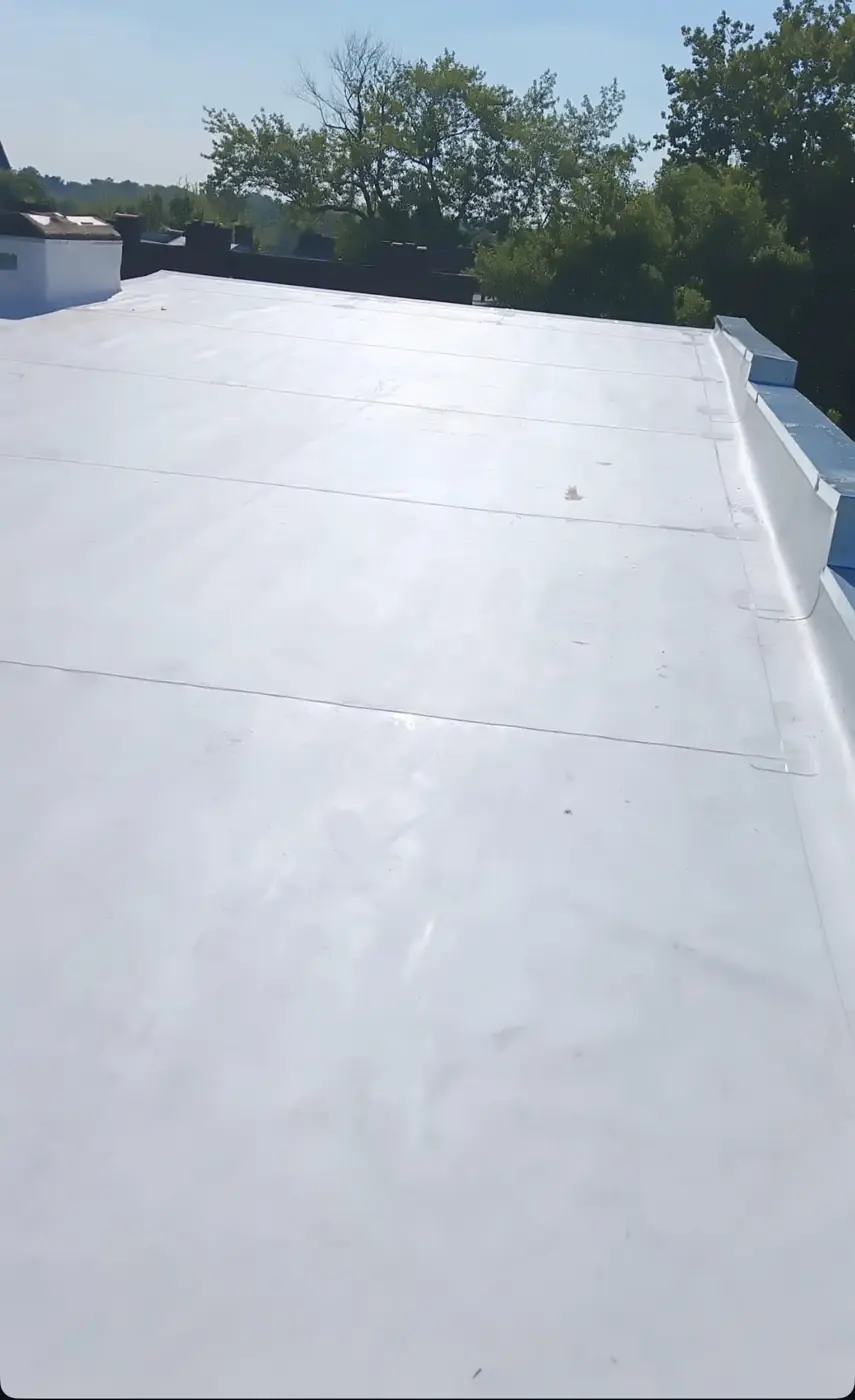
What TPO is
TPO (thermoplastic polyolefin) is a single-ply roofing membrane — a flexible white sheet installed over insulation and cover board on flat and low-slope roofs. The sheets overlap, and the overlaps are fused together with hot air. The result is one continuous waterproof layer across the roof.
1. The seams are welded, not glued
Seams are where flat roofs fail. On TPO, the overlaps are melted together with a hot-air welder, so the seam becomes part of the membrane itself. Every seam can be probed after welding to confirm it's closed.
Roofs that rely on adhesives or tapes at the seams can loosen as they age and bake in the sun. A welded seam doesn't depend on glue holding.
2. Repairs are small, fast and use the same material
A puncture or open seam on TPO is fixed by cleaning the area and heat-welding a new piece of TPO over it. The patch becomes part of the roof. No torches, no hot asphalt and no buckets of mastic that dry out and crack.
Small repairs stay small, and that's where the savings come from over the life of the roof.
3. The white surface keeps the roof — and the building — cooler
A white TPO roof reflects much of the sun's heat instead of absorbing it. In a Houston summer that means less heat load on the building's air conditioning, and less heat stress on the roof itself. A roof that stays cooler ages slower.
4. Problems are easy to see
A smooth white surface shows everything: punctures, dirt trails from ponding water, loose flashing, debris around drains. On a gravel-covered roof the same problems hide under the rock. If you can see a problem early, you can fix it while it's cheap.
5. The maintenance routine is simple
Keeping a TPO roof in good shape comes down to a short list:
- Inspect it twice a year, and after major storms
- Keep drains, scuppers and gutters clear
- Check seams and flashings at walls, curbs and pipes
- Reseal caulk at termination bars and edge metal as it ages
- Use walkway pads on paths to rooftop equipment
How TPO compares on maintenance
| Roof type | Seams | Typical repair | Maintenance notes |
|---|---|---|---|
| TPO | Heat-welded | Weld a TPO patch | Easy to inspect; reflective white surface |
| Roof coating | Seamless coating over the old roof | Spot-coat the area | Needs recoating as the coating wears |
| EPDM (rubber) | Adhesive or tape | Glued or taped patch | Seams can loosen with age; dark surface absorbs heat |
| Modified bitumen | Torched or adhered laps | Torch or cold-applied patch | Heavier; torch work on the roof |
| Built-up (gravel) | Layered asphalt and felt | Remove gravel, patch layers | Gravel hides problems; heavy |
Questions
How long does a TPO roof last?
It depends on the membrane thickness, how well it's installed and how it's maintained. Many TPO roofs last 20 years or more with regular inspections and repairs.
Can TPO go over my existing roof?
Sometimes. If the existing roof is dry and code allows another layer, a TPO recover can go over it. We check for moisture first.
Is TPO good for Houston weather?
Yes. The white surface reflects heat, and welded seams hold up to heavy rain. Regular drain cleaning matters most here, because ponding water is what stresses a flat roof.